Leave a Message

Thank you for your message. We will be in touch with you shortly.

What We Won't Do

1
What We Won't Do
Most agents open by telling you what they'll do for you. We'd rather start with what we won't, because that's usually where the money is.
2
We Won't Tell You What You Want To Hear About Price
If we think your number is wrong, you'll hear it in the first meeting, not after 45 days on market. Overpricing costs sellers more than any commission conversation ever will.
3
We Won't Guess at What Your Home Needs
Preparation is where value gets made or lost. We'll show you which improvements change the number, which ones don't, and what the data behind that actually says.
4
We Won't Take A Repair Request At Face Value
Buyers routinely ask for the full bid on items that don't warrant it. We price the work independently before we respond.
5
We Won't Go Quiet When It Gets Uncomfortable
The hardest moments in a transaction are the ones agents most often handle by not calling. You will hear from us specifically when there's bad news.
6
We Won't Call It A Win Just Because It Closed
A sale that lands below where it should have is still a loss. You'll know the difference, because we'll show you the numbers either way.
7
We Won't Accept An Outcome For You That We Wouldn't Accept For Our Own Family
That's the standard. It's the only one we've ever used.
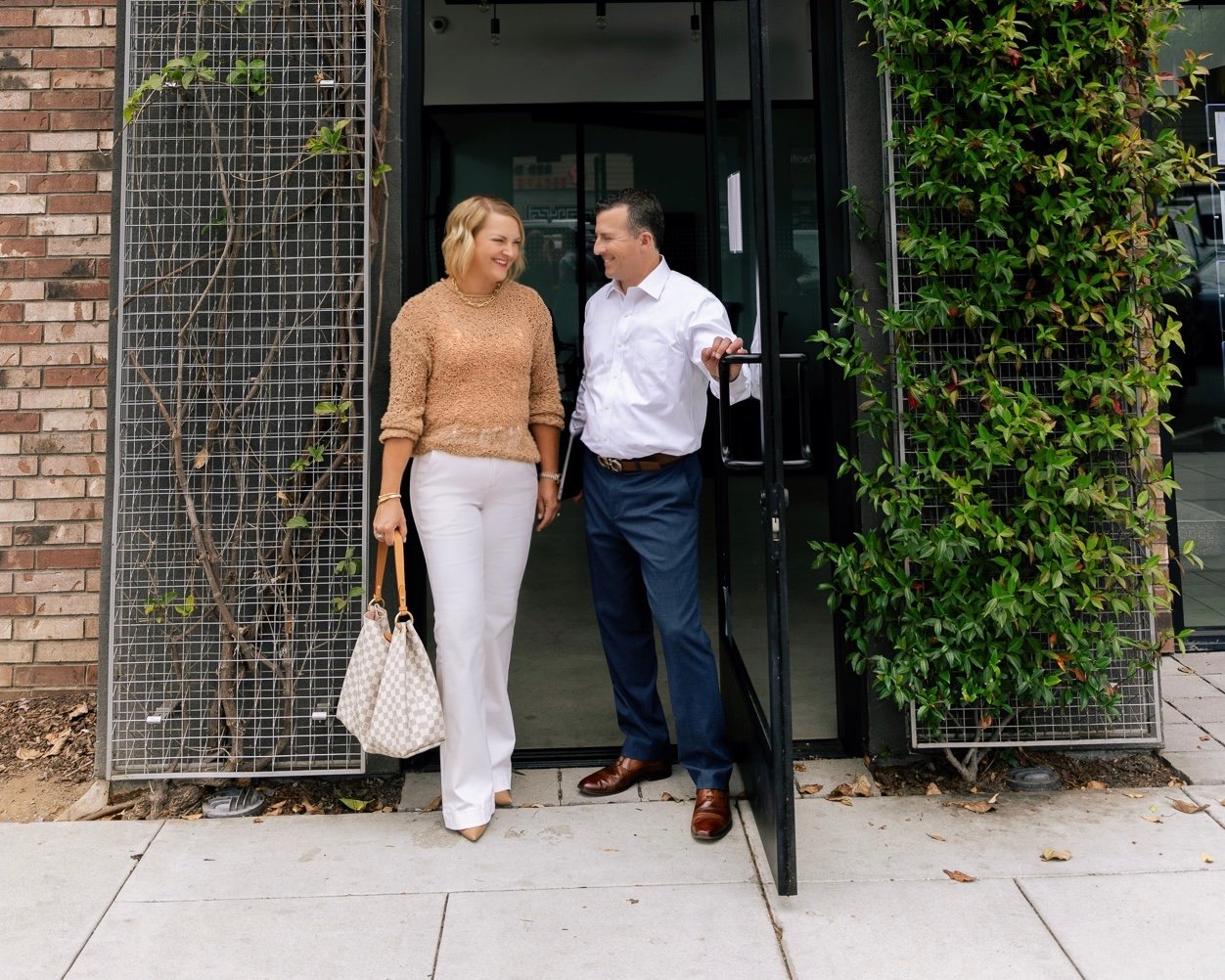
Kelly and Graham Levine, husband-and-wife real estate team

How We Split The Work

Kelly: The Part Before There's An Opponent
People tend to assume the marketing half of a real estate team is the creative one. Kelly's work is closer to underwriting.

Before a home is photographed, she has worked through what it is genuinely worth, which buyers exist for it right now and how many, what condition issues will surface in inspection, and what preparation is worth doing against what it returns. The photography, the staging, the exposure strategy: those are the output. The analysis is the product.

Most of the money in a sale is decided here, quietly, weeks before an offer exists. It is also where the hardest conversation happens, because it usually involves telling someone something they did not want to hear about their own house.

Graham: The Part Once There Is
Graham leads our negotiations. Before real estate, he negotiated in situations where the stakes were not financial. The habit it built is straightforward: find out what the other side actually needs, stay calm, and don't fold because folding is easier.

There is a moment in most transactions where accepting the number in front of you is simpler than holding. A great many deals get settled in that moment and reported back to the client as everyone winning. That is not how we work.

The Proof

$400,000 In A Week

$400,000 In A Week

An out of state executor came to us holding a cash offer from an investor who wanted a quick close. It was clean, it was fast, and it was well below what the property could do.

We walked her through what full preparation and open-market exposure would realistically produce, including what could go wrong. She chose our approach. The home sold in one week for $400,000 more than the offer she had in hand.

Every property and market is different, and we won't promise you that outcome. But the principle holds across almost every sale we've handled: the easy path is usually the expensive one.

When the sale isn't really about the house

When the sale isn't really about the house

We work regularly with estate planning attorneys, probate attorneys, and professional fiduciaries across San Diego County, and directly with executors, trustees, and beneficiaries.

These sales have a different shape. There are timelines set by a court rather than by a market. There are family members who don't agree. There is often a property that hasn't been updated in thirty years, and a decision about whether to invest in it at all. And there is usually someone handling all of it while grieving.

Our role is to take the property off your list of things to worry about, give you honest numbers, and move at the pace the situation requires rather than the pace we'd prefer.

We are not attorneys and we do not give legal advice. If you need a referral, we work with several we trust and we're glad to make the introduction.

More on how we handle estate and trust sales

Our Track Record

Two decades of helping North County San Diego families make smart moves.

20+

Years of Experience

Top 2%

of Realtors Nationwide

500+

Homes Sold

5 ★

Google Rating From Clients

Start With The Numbers, Not The Pitch

Most people call an agent when they've already decided. We'd rather talk earlier than that, when the question is still whether a move makes sense at all. Tell us about the house. We'll tell you what we think it's worth, what it would take to get there, and whether the timing works. If the answer is that you should wait, we'll say that.

Let's Talk

When The Stakes Are High, The Plan Matters More

We help North County San Diego homeowners navigate real estate decisions when life is changing, whether that's a growing family, a new chapter, or a home held in trust.

Most of our clients aren't moving on a whim. They're moving because something significant has changed: a family that's outgrown their house, a new chapter in retirement, shifting financial priorities, or the responsibility of selling a home held in trust or estate.

These transitions don't reward shortcuts. They reward clear thinking, careful sequencing, and experienced guidance.

We focus on the parts of the transaction that are easiest to get wrong: coordinating the timing of a sale and purchase, pricing correctly in a changing market, protecting your equity, and keeping every moving piece aligned. Our job is to bring clarity to complexity, so you can move forward with confidence.

Move-up transactions are among the most complex in residential real estate. You're not just finding your next home, you're orchestrating two transactions with competing timelines, financing considerations, and market variables.

We help clients evaluate whether to sell first or buy first, understand true affordability, and use market data, not pressure, to guide decisions. When it creates strategic advantage, we leverage Compass tools like Private Exclusives and Coming Soon marketing to build flexibility and reduce exposure on both sides of your move.

The goal isn't speed. It's control.

Learn More About The Process of Selling

Trust and estate sales carry added weight. Pricing must be defensible. Communication with attorneys, co-trustees, and beneficiaries must be precise. Legal and family timelines must be respected.

We work closely with trustees, executors, and estate attorneys to manage residential sales with a structured, process-driven approach. Our clients can expect thorough preparation, consistent updates, and a focus on protecting value while minimizing stress for everyone involved.

Learn More About Trust and Estate Sales

How It Works

No surprises, no confusion. Just clear steps from start to finish.

Frequently Asked Questions

1
What makes a move-up transaction different from a typical sale or purchase?
You're managing two transactions with interconnected timelines, financing that depends on your current equity, and decisions that affect each other. A misstep on one side can create problems on the other. It requires more planning upfront and tighter coordination throughout.
2
How do you help clients sell and buy at the same time without unnecessary risk?
We build a sequence that accounts for timing, financing, and contingencies on both sides. That includes evaluating your purchasing power before you list, identifying potential leverage points, and using tools like Compass Private Exclusives when they create strategic advantage. The goal is to give you control over the timeline rather than reacting to it.
3
When is the right time to start planning- even if I'm not ready to move yet?
Earlier than most people think. A quick conversation now can help you understand your equity position, what preparation might be needed, and how long the process typically takes. That way, when you're ready to move, you're not starting from scratch.
4
How do you price a home in a shifting or uneven market?
We look at recent comparable sales, current competition, absorption rate, and what buyers in your price range are actually doing- not just what they were doing six months ago. Pricing isn't about optimism or caution; it's about positioning your home to attract serious offers within a realistic timeframe.
5
Should I sell first or buy first?
It depends on your financial position, your risk tolerance, and what the market is doing at the moment. We walk through both scenarios with you- what each path looks like, what could go wrong, and what flexibility you actually have. Most clients have a clear preference once they see the real numbers.
6
How do you protect my equity during a move-up?
By pricing correctly from the start, preparing the home strategically, and structuring the transaction to minimize carrying costs or rushed decisions. We also keep a close eye on what you're buying- making sure you're not overextending based on optimistic assumptions about your sale.
7
What does your process look like from first conversation to closing?
We start with a planning conversation to understand your situation and your timeline. From there, we build a strategy, prepare your home, bring it to market, and manage negotiations through close- keeping you informed at every step without overwhelming you with noise.
8
How are trust, estate, and probate sales different from a traditional sale?
There are additional legal requirements, more parties involved, and often a heightened need for defensible pricing. Timelines may be dictated by the court or by family circumstances. We adjust our process to meet those requirements while keeping things as simple as possible for the people managing the sale.
9
How do you handle pricing and communication when there are multiple decision-makers?
We establish clear communication channels early- who needs to be informed, who has decision-making authority, and how updates will be shared. Pricing recommendations are grounded in data so everyone is working from the same set of facts, which helps reduce friction when it's time to make decisions.
10
Do you work directly with attorneys and fiduciaries during the process?
Yes. We coordinate with estate attorneys, trust administrators, and fiduciaries regularly. Our role is to handle the real estate side thoroughly and communicate clearly, so the legal and financial professionals involved can do their jobs without unnecessary back-and-forth.

Let's Connect on Instagram