Why would a home in Santa Fe Hills carry a noticeably lighter special tax line than a nearly identical home two subdivisions away in San Elijo Hills, even though both sit inside San Marcos, both feed into the same general school boundaries, and both list for roughly the same price? The honest answer has nothing to do with square footage, upgrades, or which builder poured the foundation. It comes down to a number most buyers never see until escrow: which Community Facilities District, or CFD, a specific parcel happens to sit inside, and how far along that district is in paying off its bonds.
Most people shopping in San Marcos treat Mello-Roos as a single, predictable surcharge that comes with "newer construction." That assumption is the part worth correcting. San Marcos does not have one Mello-Roos tax. It has a patchwork of them, formed at different times, funding different projects, on different repayment schedules, and the community's name on the real estate sign tells you almost nothing about which one applies to the house in front of you.
San Marcos Is One of the More CFD-Dense Cities in the County
Community Facilities Districts exist because Proposition 13 capped how fast standard property taxes can grow, which left cities short on cash for the roads, schools, and parks that new subdivisions require. San Marcos leaned on this financing tool heavily during its growth years. Industry guidance on California Mello-Roos districts groups San Marcos alongside Chula Vista, Carlsbad, Poway, and the Eastlake and Otay Ranch areas as communities with well-established CFDs, largely because of how much new construction each city absorbed. In practice, that means most San Marcos homes built from the late 1980s forward sit inside a CFD boundary of some kind, while pockets of older, more central San Marcos do not.
That density is exactly why the community-level comparison breaks down. When almost every newer tract has a CFD, the meaningful question stops being "does this house have Mello-Roos" and becomes "which one, how much is left, and what is it actually funding."
Same Subdivision, Two Different Tax Authorities
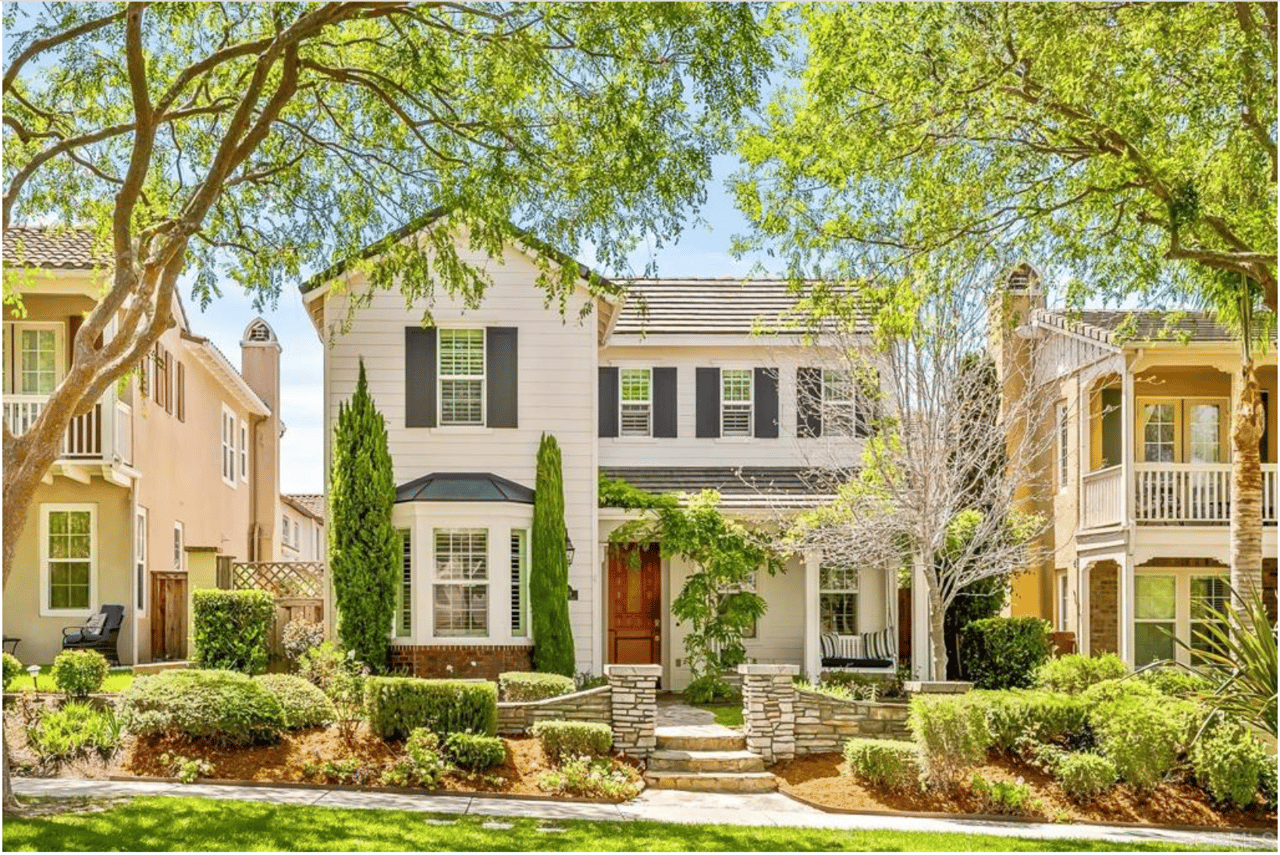
Santa Fe Hills is the clearest example of how granular this gets. The bulk of the community sits inside CFD 88-1, which was formed to fund street improvements, sewer and water lines, drainage facilities, a portion of area schools, a community park, and a fire station site. But a 94-home pocket within Santa Fe Hills, on Loma Alta Drive, Castia Lane, and Alta Court, is carved out entirely. Those homes are not part of CFD 88-1 at all. They fall under CFD 98-1 and CFD 98-2 instead, and unlike the rest of Santa Fe Hills, they also carry their own homeowners association.
CFD 98-2 funds a narrower slice of infrastructure than CFD 88-1: public lighting, street lighting and traffic signals, parkway and median landscaping, and maintenance of passive open space, habitat preservation areas, slope areas, and drainage channels required by the city. It is not funding a school or a fire station. Two buyers touring homes half a mile apart in the same named community can be looking at entirely different tax obligations funding entirely different things, and neither the yard sign nor the neighborhood name will tell them that.
The Bond That Quietly Expired
Here is the part that actually reverses the assumption most buyers walk in with. The instinct is that older tracts must have been paying Mello-Roos longer and should therefore cost more over time. CFD 88-1 shows the opposite can be true.
The facilities portion of CFD 88-1, the piece that financed the roads, schools, park, and fire station, expired on September 1, 2019. That bond is paid off. What remains is the services portion, which funds ongoing police and fire protection and never sunsets, but it started at a comparatively small $151.38 annually in fiscal year 2013-14 and is structured to increase by 2 percent every year. Running that stated 2 percent annual increase forward from that base year lands the current services-only charge somewhere in the neighborhood of $190 to $195 a year, a fraction of what the combined facilities-plus-services tax once was.
That is the mechanism worth understanding. A home in the main Santa Fe Hills tract today is not carrying the same tax burden it carried in 2015. The bond retired, the number dropped, and unless a buyer or their agent is checking the current secured tax bill rather than relying on outdated online chatter about the neighborhood, they will never see that the picture already changed.
What a Fully Loaded New-Construction Tract Looks Like by Comparison
San Elijo Hills offers the other end of the spectrum. In the Belmont tract, a 131-home neighborhood built by Lennar in 2012 on Chert Drive and Dolomite Way just north of San Elijo Road, buyers are working with a different stack of costs entirely: a monthly HOA fee around $240, a base tax rate near 1.09 percent of net assessed value, and Mello-Roos assessments of roughly $1,800 a year on top of that. None of those numbers are wrong or unusual for a newer master-planned tract. They simply belong to a different CFD, on a different repayment timeline, than anything in Santa Fe Hills.
| Tract | Tax authority | Status | Approximate added cost |
|---|---|---|---|
| Santa Fe Hills (main tract) | CFD 88-1 | Facilities bond retired 9/1/2019; services portion active, rising 2%/yr | Roughly $190 to $195/yr today |
| Loma Alta (94 homes, Santa Fe Hills area) | CFD 98-1 and 98-2, plus a separate HOA | Active, funds lighting, landscaping, open space maintenance | Distinct from and in addition to main tract |
| Belmont, San Elijo Hills | CFD (Lennar-built, 2012) plus HOA | Active | About $1,800/yr Mello-Roos, $240/mo HOA, ~1.09% base rate |
Line these three up and the lesson is not that one community is better or worse than another. It is that "San Marcos Mello-Roos" is not one line item you can price in from memory. It is a parcel-specific figure that depends on which district a specific address happens to sit in, and that figure can shift meaningfully even between two homes that share a mailing address's neighborhood name.
Mello-Roos is also apportioned by the Rate and Method of Apportionment set when each district formed, using things like square footage, lot size, or land use category rather than market value, since Proposition 13 prohibits assessing it as a percentage of a home's worth. Two houses priced identically can carry different Mello-Roos bills simply because one has a larger footprint or sits on a different lot classification within its CFD.
Where the Actual Number Lives
None of this is guesswork once you know where to look. The current secured property tax bill lists Mello-Roos under a section usually labeled Fixed Charge Special Assessments, with line items that start with the CFD name or number. The San Diego County Assessor's office can locate a district by parcel number through its Mello-Roos lookup, and the City of San Marcos maintains its own CFD and Mello-Roos finance page along with a public record of bond reports showing when each district's bonds were issued or refunded, including refunding bonds for CFD 99-01 in 2014, 2018, 2021, and most recently 2024. Refunding is a routine step cities take to manage interest costs on outstanding debt, and it is worth confirming which refunding a specific CFD has gone through, since it affects the trajectory of what is left to pay.
Buyers should also know that city-formed CFDs are not the only layer in play. San Marcos Unified School District administers its own separate Community Facilities District disclosures for school facilities financing, which can appear on a tax bill in addition to, not instead of, a city CFD. California law requires this information to be disclosed in writing before a sale is final, and lenders are required to fold the special tax into a buyer's debt-to-income calculation, which means a higher Mello-Roos bill can reduce how much home a buyer qualifies for even when the sale price stays the same. The full picture, including remaining bond term, escalation clauses, and whether an individual CFD allows prepayment of the remaining balance, sits in the county's Mello-Roos records and the district's Rate and Method of Apportionment, not in the MLS listing remarks.
A Few Questions Worth Asking Before You Offer
Does Mello-Roos ever go away? Yes, once the underlying bonds are paid in full, as happened with the facilities portion of Santa Fe Hills' CFD 88-1 in 2019. Some districts keep a smaller ongoing charge for services after that, others do not.
Is the amount tied to how much I pay for the house? No. Because of Proposition 13, Mello-Roos cannot be based on assessed value. It is set by formula, often tied to square footage or lot classification, which is exactly why two similarly priced homes can carry different amounts.
Does every San Marcos home have it? No. Older, more central parts of the city predate most CFD formation. It is concentrated in the master-planned communities built from the late 1980s onward, and even within those, coverage varies parcel by parcel.
Comparing San Marcos communities on price per square foot alone leaves out one of the more consequential numbers in the true cost of ownership. If you are weighing a home in Santa Fe Hills against one in San Elijo Hills, or trying to understand exactly what CFD sits under a specific address before you write an offer, Graham & Kelly Levine can pull the parcel-level detail before you get attached to a number that might not hold up at underwriting. Schedule a Strategy Session and get the full picture before you write the offer, not after.